Emir’s Palace – Kano Bluework
A Designer’s First Look: Elegant, Grounded, and Full of Story
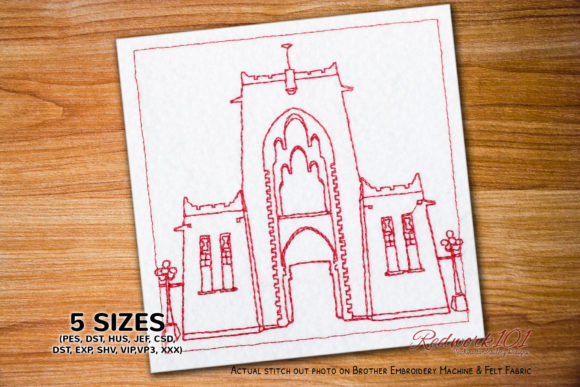
When Emir’s Palace – Kano Bluework landed in my inbox, I paused—not because it’s flashy, but because it’s quietly commanding. This isn’t a design that shouts; it whispers heritage, geometry, and quiet dignity. As an embroidery designer who tests hundreds of machine embroidery designs each year for personalized gift shops and Etsy sellers, I immediately sensed its strength: it bridges tradition and modern gifting with remarkable ease. The motif—inspired by the gate to Gidan Rumfa, the Emir’s Palace in Kano—carries ceremonial weight without feeling stiff or overly formal. It reads as elegant, timeless, and deeply handmade—even before stitching begins.
Why This Design Fits So Many Personalized Gift Moments
Emir’s Palace – Kano Bluework is unusually versatile across life milestones. For baby embroidery, it adds cultural resonance and quiet sophistication to a nursery blanket or heirloom pillow cover—especially when paired with soft ivory linen or organic cotton. Wedding gift designers will love how it elevates a custom towel set or monogrammed apron for the couple who values meaning over mass appeal. Small shop owners crafting family keepsakes can use it on framed hoop art or stitched-on quilt squares—each piece feels intentional, not decorative.
It also shines on functional items: embroidered towels gain instant artisanal credibility; tote bags become conversation starters; pillow covers invite tactile appreciation; and aprons take on quiet authority in the kitchen. Because the design leans into symmetry and architectural rhythm—not florals or whimsy—it avoids seasonal limitations. It works year-round, across generations, and especially well for customers seeking gifts rooted in identity, travel memory, or cultural pride.
Where to Use It Thoughtfully (and Where to Pause)
Like any strong design, Emir’s Palace – Kano Bluework rewards intentionality. Its clean lines and balanced proportions make it highly adaptable—but certain applications need extra care:
- Small lettering or delicate details: The gate motif includes fine linear elements. If you’re adding names or dates nearby, keep fonts large and stitch-friendly—avoid cramming text into narrow negative space.
- Textured fabric: On heavy terry cloth or nubby linen, test first. The design’s clarity depends on crisp edge definition—too much texture can blur subtle transitions.
- Stretchy baby clothes: Not ideal for onesies or bodysuits unless stabilized heavily and digitized for stretch. Stick to stable substrates like swaddles, blankets, or bibs.
- Curved surfaces: Avoid wrapping tightly around mugs or curved tote handles—the geometry may distort. Best placed on flat panels.
- Dark fabric: Remember: the “Box Stitch” shown is optional, and the outer box color often differs from the main motif. Confirm thread contrast in your mockup—deep indigo or charcoal backgrounds need brighter blues or cream accents to pop.
- Frequent washing: For embroidered towels or kitchen linens, choose high-quality, colorfast threads and reinforce stabilizer layers. Wash-test a sample before fulfilling orders.
How It Elevates Your Brand—and Your Buyer’s Experience
Customers don’t just buy stitches—they buy meaning, trust, and perceived craftsmanship. Emir’s Palace – Kano Bluework signals attention to detail and narrative depth. When featured in an Etsy listing or boutique window, it encourages slower scrolling, longer engagement, and higher perceived value. Buyers notice the balance, the restraint, the sense of place—and they associate those qualities with *your* shop.
In product photography, this design performs beautifully: its symmetry centers compositions, its bluework palette photographs consistently across lighting, and its cultural grounding invites storytelling captions (“Inspired by the gates of Gidan Rumfa, Kano”). That emotional connection translates directly to conversion—especially among buyers seeking personalized gifts with soul, not just surface charm.
Practical Embroidery Notes Every Maker Should Run Through
Before stitching Emir’s Palace – Kano Bluework for a customer order—or listing it in your digital embroidery file shop—run this quick checklist:
- Test on scrap fabric matching your final substrate (e.g., terry, linen, quilting cotton).
- Check thread color contrast, especially if using non-traditional palettes—some blues recede on navy; creams disappear on ecru.
- Confirm hoop size compatibility. While not specified, most Kano-inspired motifs fit comfortably in 4x4 or 5x7 hoops—but verify before digitizing additions.
- Review stitch density. Dense fill areas hold up well on stable fabrics but may pucker on lightweight weaves. Adjust underlay if needed.
- Use appropriate stabilizer: Tear-away for stable wovens, cut-away for knits or towels, and water-soluble for delicate surfaces like silk-blend pillow covers.
- Compare light and dark fabric mockups. The optional Box Stitch changes visual hierarchy—see how it reads on both ends of the spectrum.
- Inspect small details post-stitch. Gate latticework and corner motifs should remain distinct—not fuzzy or merged.
- Confirm commercial licensing. Since this is intended for personalized gift products and small shop use, ensure your source permits resale of finished embroidered items—not just digital file use.
Final Thoughts for the Handmade Seller
Emir’s Palace – Kano Bluework isn’t just another embroidery file—it’s a thoughtful bridge between craft and culture. For baby product creators, it adds gravitas to a nursery line. For wedding gift designers, it offers distinction in a saturated market. For Etsy sellers and small shop owners, it’s a reliable anchor piece: photogenic, meaningful, and endlessly adaptable across Asia-themed collections or global heritage edits. It doesn’t chase trends—it deepens them. And in a world of fast-made, fast-forgotten gifts, that’s exactly the kind of handmade product customers return for, again and again.