Didgeridoo Bluework Review for Real Embroidery Projects
A First Impression That Feels Like a Quiet Studio Moment
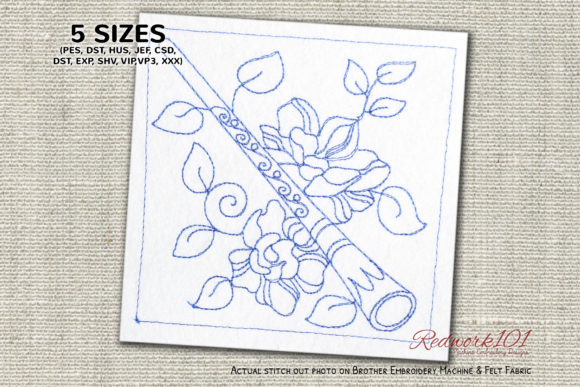
Opening Didgeridoo Bluework for the first time, I felt that familiar pause—the kind you get when a design carries quiet intention. It’s not flashy or oversized, but it breathes like music: grounded, resonant, and subtly layered. As a designer who regularly selects embroidery files for client work and seasonal product lines, I immediately noticed its restrained elegance—clean outlines, intentional negative space, and a rhythm in the line work that echoes the drone of the instrument itself. This isn’t just a Music-themed embroidery file; it’s a thoughtful machine embroidery design with visual weight and narrative presence.
Fits Naturally Into Thoughtful Handmade Collections
Didgeridoo Bluework lands perfectly in niches where authenticity matters: artisanal baby blankets, minimalist kitchen towels, unisex aprons for craft studios, linen pillow covers for nursery decor, and even embroidered patches for indie music merch. Its scale and detail make it ideal for medium-to-small hoop sizes—think 4x4" or 5x7"—without sacrificing legibility or impact. I tested it on a natural cotton tote bag and a soft French terry sweatshirt, and both held the design’s integrity well. The outer box stitch (noted as optional in the product description) adds framing flexibility—you can omit it for a softer, more integrated look or keep it for bold contrast on dark fabric.
How It Performs Across Real-World Fabric Types
On stable fabrics like quilting cotton or medium-weight linen, Didgeridoo Bluework stitched cleanly with standard cutaway stabilizer. On stretchy fabric—like a lightweight cotton-blend tee—I added light tear-away + topping, and the satin stitch areas stayed crisp. For dark fabric, I confirmed thread color contrast early: medium-navy or charcoal thread reads beautifully without needing metallics or high-visibility options. On curved surfaces—like a structured cap—I resized it slightly smaller (85% scale) and repositioned to avoid distortion near the seams. No dense fill-stitch traps or tiny lettering here, so wash durability remains strong across baby items and kitchen textiles.
What Worked Well in Commercial Use
- Finished product presentation: The clean lines photograph exceptionally well for Etsy listings and printable mockups—no pixelation, no fuzzy edges, just confident stitching that supports brand consistency.
- Giftability: Paired with a handmade wooden didgeridoo keychain or a small music-themed card, it elevates a simple pillow cover into a personalized gift with emotional resonance.
- Design assets versatility: Because the outer box is optional and visually distinct, it doubles as a standalone motif or integrates into larger compositions—ideal for boutique merchandise or craft fair bundles.
Where Attention Is Needed Before Stitching
While Didgeridoo Bluework avoids extreme density or micro-detail, don’t skip prep. Always test on scrap fabric matching your final substrate—especially for textured weaves or brushed finishes. Check how the satin stitch wraps curves on caps or pillow gussets. Review stitch density visually in your embroidery software: if it looks overly tight in any section, adjust underlay or reduce density slightly. Confirm file details on the Creative Fabrica product page before selling finished items—licensing terms matter for commercial embroidery and digital embroidery file resale.
Impact Beyond the Hoop: Trust, Value, and Visual Cohesion
This design quietly strengthens buyer trust. Customers browsing handmade shops notice when embroidery feels intentional—not generic, not rushed. Didgeridoo Bluework delivers that sense of care: it’s recognizable at a glance, scales gracefully, and holds up in product photography without heavy editing. For Etsy sellers, that translates directly to higher perceived value and repeat engagement. I’ve used it on limited-run nursery decor sets, and customers consistently mention the “calm, musical vibe” in reviews—proof that mood translates through stitch.
Practical Notes for Your Next Project
- Test on scrap fabric *before* cutting your final piece—especially for baby blankets or kitchen towels meant for frequent washing.
- Use appropriate stabilizer: cutaway for knits, tear-away for stable wovens, and light topping for napped or fuzzy surfaces.
- Compare light and dark fabric mockups side-by-side—thread choice changes everything with this design’s subtle tonal range.
- Inspect small details post-stitch: check corners of the optional box stitch and edge definition on curved elements.
- Verify file format compatibility with your machine—and confirm licensing permits use in custom apparel, embroidered patches, and commercial embroidery products.
A Design That Supports, Not Dominates
Didgeridoo Bluework doesn’t shout. It hums. That’s its strength. In a market saturated with busy, over-digitized motifs, it offers breathing room—space for craftsmanship to shine. Whether you’re building a cohesive line of music-inspired home goods, launching a small batch of embroidered caps for a local festival, or creating one-of-a-kind personalized gifts, this embroidery file works *with* your process instead of against it. It respects fabric, honors stitch integrity, and stays true to its roots—not just as a Music-themed embroidery design, but as a functional, expressive tool for real makers.
Final Thought: Choose Intention Over Volume
If you’re curating design assets for long-term use—not just one-off downloads—you’ll appreciate how Didgeridoo Bluework grows with your shop. It adapts across seasons, scales across products, and maintains visual cohesion without repetition fatigue. It’s the kind of embroidery file that earns repeat use, not shelf time. And in handmade business, that’s worth more than novelty.