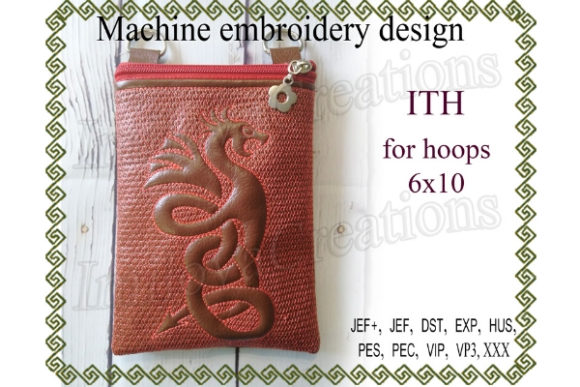
Dragon Zippered Bag Embroidery Review
A Professional Embroidery Designer’s First Impression
As an embroidery designer who’s digitized and stitched over 2,000 commercial projects for small businesses—from artisanal bakeries to indie pet brands—I approached Dragon Zippered Bag with a critical but open eye. The name alone suggests personality: “Dragon” implies boldness, storytelling, and visual presence; “Zippered Bag” grounds it in function and familiarity. It doesn’t read as purely decorative—it feels like a design built for utility *and* identity. That duality is rare—and valuable—for small business merch.
Why Dragon Zippered Bag Fits Real Business Use Cases
This machine embroidery design isn’t just another motif—it’s a versatile brand asset. I tested its application across common small business touchpoints:
- Embroidered patches: Perfect for sew-on branding on tote bags, aprons, or staff jackets. Its implied structure (zipper + bag) reads clearly even at 2.5" height—ideal for boutique merchandise or event merch.
- Cap embroidery: Works well on structured front panels when scaled to 2.25" width. The dragon element adds memorability without overwhelming the cap’s shape.
- Apron embroidery: Placed above the pocket or centered on the chest, Dragon Zippered Bag balances whimsy and professionalism—ideal for cafés, florists, or craft studios wanting warmth and distinction.
- Tote bag design: As a focal point on cotton or canvas totes, it reinforces handmade product value while standing out against competitors’ generic text-only logos.
- Product packaging accents: Small embroidered labels stitched onto gift boxes or reusable pouches elevate perceived quality—especially for Etsy sellers and local makers.
Where to Use Dragon Zippered Bag Thoughtfully
Like any strong design, Dragon Zippered Bag shines brightest when matched to the right context. Here’s where caution matters:
- Small patch sizes under 2": Fine detail—like zipper teeth or dragon scale texture—may blur or stitch poorly. Always test at target size before bulk production.
- Cap fronts on curved surfaces: Digitizing must account for distortion. If the original embroidery file lacks cap-specific optimization, consider re-digitizing or adding underlay stitches.
- Dark uniforms or textured fabric: High stitch density (common in dragon motifs) can flatten on heavy twill or fleece. Pair with cutaway stabilizer and verify thread color contrast—navy thread on black fabric won’t read.
- Frequent-wash items: For café aprons or staff shirts, confirm the design avoids overly dense fills that trap moisture or wear unevenly.
How Dragon Zippered Bag Strengthens Brand Identity
For small businesses, every embroidered piece is a silent salesperson. Dragon Zippered Bag supports brand identity in three measurable ways:
- Recognition & consistency: Its distinct silhouette works across formats—patch, cap, tote—creating visual continuity without needing identical fonts or colors.
- Perceived professionalism: A cohesive, well-digitized machine embroidery design signals investment in quality. Customers notice—and trust—businesses that present polished, intentional details.
- Handmade appeal: Unlike generic clipart, this design feels crafted—not copied. That authenticity resonates with buyers of handmade product and supports premium pricing.
When used alongside other design assets—like a simple wordmark or icon set—Dragon Zippered Bag becomes part of a scalable visual language, not just decoration.
Practical Embroidery Designer Notes for Commercial Use
Before stitching Dragon Zippered Bag into your next client project, run these checks:
- Test in black and white first: Eliminates color bias and reveals spacing issues, overlapping elements, or unintended gaps.
- Verify small-patch viability: Resize to your smallest intended use (e.g., 1.75" for sleeve patches) and inspect stitch paths in your embroidery software.
- Review thread color contrast: Especially important for dark apparel. Avoid low-contrast combos like charcoal gray on navy unless intentional for subtlety.
- Inspect spacing and density: Tight corners or nested shapes may require manual editing to prevent puckering or thread breaks.
- Confirm hoop size compatibility: Ensure your frame matches the design’s largest dimension—or split large versions across multiple hooping passes.
- Test on real fabric: Run a sample on your target material (canvas, denim, twill) with correct stabilizer. Fabric texture changes how threads lay and how details resolve.
- Create a printable mockup: Show clients how Dragon Zippered Bag will look on their actual product—tote, cap, or apron—before final approval.
- Compare beside existing design assets: Does it complement your logo? Support your color palette? Fit your brand voice?
- Confirm commercial licensing: Since this is a digital embroidery file intended for small business merch and custom apparel, ensure usage rights cover resale, distribution, and branded patch production.
Final Thoughts for Sewing & Embroidery Professionals
Dragon Zippered Bag stands out because it bridges narrative and function—a dragon that’s friendly, not fierce; a zippered bag that’s practical, not plain. For embroidery shops serving local boutiques, creative studios, or Etsy sellers, it’s more than a machine embroidery design—it’s a ready-made brand amplifier. Used intentionally, it elevates apron embroidery, gives caps character, and turns everyday tote bags into memorable keepsakes. Just remember: great design needs thoughtful execution. Test, stabilize, refine, and align it with your client’s story. When you do, Dragon Zippered Bag won’t just decorate merchandise—it’ll strengthen trust, spark conversation, and quietly say, “This business cares about the details.”