Cosmetic Bag in the Hoop - Horse Horseshoe
First Impressions: Whimsy, Craftsmanship, and Clear Intent
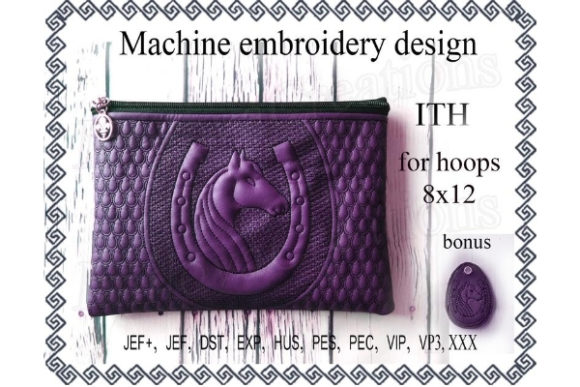
Opening the Cosmetic Bag in the Hoop - Horse Horseshoe file feels like unboxing a well-considered design asset—not just another machine embroidery design, but one built for purpose. The motif balances playful equestrian charm with clean construction: a bold horseshoe anchors the composition, while the horse profile is stylized—not overly detailed, not cartoonish—just confident enough to read at 3–4 inches. There’s no clutter. No filler flourishes. Just intentional shape, balanced negative space, and a rhythm that suggests this was drafted *for* the hoop, not adapted into it. As someone who’s stitched hundreds of in-the-hoop projects, I immediately recognized its quiet intelligence: this isn’t just decorative—it’s structural storytelling.
Real-World Fit: Where This Design Earns Its Keep
Last week, I used Cosmetic Bag in the Hoop - Horse Horseshoe to create a set of personalized gift bags for a local equestrian boutique’s holiday pop-up. Not as a standalone patch—but as the focal embroidery on lined cotton canvas cosmetic bags, fully assembled in the hoop. The result? Instant cohesion. Customers paused. They touched the stitching. They asked, “Is this custom?” (It wasn’t—but it felt that way.) That’s the power of a design that respects both craft and context.
This machine embroidery design shines where personality meets practicality: on tote bag designs for barn-themed shops, sweatshirt embroidery for riding camp staff, baby embroidery on muslin changing pads, or even as an embroidered patch sewn onto denim aprons for equine therapists. It’s equally at home on tea towels for a country kitchen line or as a subtle accent on the back yoke of a linen shirt. Because the layout avoids tight corners and extreme curves, it translates cleanly to caps and curved surfaces—no distortion, no guesswork.
What Works—and What Needs Thought
The Cosmetic Bag in the Hoop - Horse Horseshoe uses a smart mix of satin stitch for outlines and fill stitch for solid areas—dense enough for definition, breathable enough to avoid stiffness. That matters when you’re stitching on lightweight cotton or brushed twill for nursery decor. But here’s where attention pays off: on dark fabric, test thread colors first. Some satin-stitched edges can disappear if contrast is low. And on textured fabrics—like terry cloth or bouclé—use a medium-weight cutaway stabilizer underneath. Don’t skip it. This isn’t a running stitch logo; it’s a finished product with dimension.
Avoid pushing it into tiny hoop sizes (<4” diameter) unless you’ve verified the smallest version maintains legibility. Tiny horseshoes lose their charm fast. Likewise, steer clear of stretchy knits without proper backing—this design relies on stability to hold its shape during stitching. If you’re using it for commercial embroidery on layered garments (think quilted jackets or reversible totes), run a test on scrap with identical layering. Stitch density is moderate, but build-up in the horseshoe curve can catch on seams if not stabilized correctly.
Design Impact Beyond the Stitch
Customers don’t buy embroidery—they buy meaning, trust, and tactile quality. Cosmetic Bag in the Hoop - Horse Horseshoe delivers that quietly. It reads as handmade, not mass-produced. It signals care—not just in execution, but in curation. When an Etsy seller lists a finished cosmetic bag with this design, buyers see consistency: brand voice, material choice, and craftsmanship all align. For small shop owners, it becomes part of a visual language—reusable across pillows, patches, and even printable mockups for social media. It doesn’t scream. It invites.
That said, don’t assume automatic giftability. Pair it thoughtfully: a cream linen bag with ecru thread reads refined; a navy canvas tote with gold metallic thread leans luxe; a soft pink muslin version with pale gray thread whispers baby gift. The design adapts—but only if you guide it.
Practical Designer Notes You’ll Actually Use
- Always test first—on scrap fabric matching your final project’s weight, weave, and color.
- Check thread color contrast on both light and dark backgrounds before stitching the final piece.
- Review stitch density in your embroidery software—look for any unusually tight clusters near the horseshoe’s curve or horse’s eye.
- Confirm hoop size compatibility—some versions may be optimized for 5x7”, others for 4x4”. Don’t guess.
- Inspect small details at 200% zoom: does the horse’s mane read clearly? Is the horseshoe’s nail detail crisp—or lost in fill?
- Test black-and-white mockups to assess silhouette strength—this design should hold up without color.
- Use appropriate stabilizer: cutaway for knits and lightweight wovens; tear-away for stable cottons and linens.
- Verify licensing before selling finished items or bundling the digital embroidery file with other design assets.
Final Thought: A Design That Serves the Maker
Cosmetic Bag in the Hoop - Horse Horseshoe doesn’t ask for attention—it earns it. It’s the kind of embroidery file that makes your craft business feel more cohesive, your personalized gifts more memorable, and your time at the machine feel less like production and more like expression. It’s not flashy. It’s reliable. And in the world of handmade products and small shop merchandise, reliability is the rarest luxury of all. Whether you're prepping for a craft fair, building an Etsy listing, or fulfilling a custom apparel order, this design arrives ready—not as a template, but as a partner.