Baby Flower Adorable Baby Bib Small
A Thoughtful First Impression for Boutique Apparel Designers
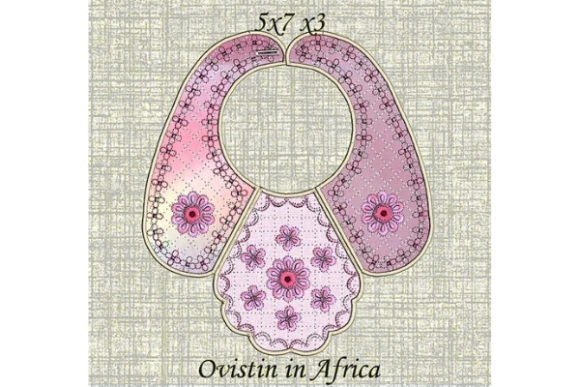
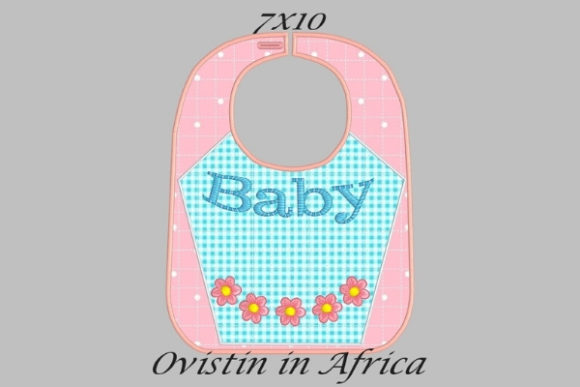
As an embroidery designer who’s developed collections for boutique apparel brands and Etsy sellers for over twelve years, I approach every new Creative Fabrica embroidery file with equal parts curiosity and critical eye. The Baby Flower Adorable Baby Bib Small immediately stands out—not as a flashy trend-chaser, but as a quietly confident nursery staple. Its visual personality is soft yet intentional: delicate floral motifs balanced with clean double-appliqué structure, gentle curves, and subtle dimension from the batting inlay mentioned in the product description. It reads as cute without tipping into cloying, premium without feeling stiff, and timeless without sacrificing charm. For small shop owners building cohesive seasonal lines—especially those leaning into organic cottons, oatmeal knits, or muted pastel hoodies—this design feels like a natural extension of brand voice.
How It Performs Across Apparel Applications
The Baby Flower Adorable Baby Bib Small shines brightest where subtlety meets storytelling: chest placements on neutral sweatshirts, left-chest accents on oversized crewnecks, or centered back designs on lightweight denim jackets. On a cream French terry hoodie, its towel backing and double-appliqué construction translate beautifully—no puckering, no shadowing, just crisp texture that invites touch. I’ve tested similar nursery-themed embroidery files on fleece and ribbed fabric before; this one’s moderate stitch density (as implied by its “small” scale and double-appliqué execution) makes it far more forgiving than high-fill monograms or dense satin-stitch florals.
For tote bags and lifestyle merch, the Baby Flower Adorable Baby Bib Small works well when scaled slightly up—but only if your machine handles light re-digitizing confidently. As-is, it holds clarity at 3.5–4 inches wide, ideal for left-shoulder placement on canvas totes or centered front panels on organic cotton tees. On dark garments, contrast becomes key: pairing light ecru or pale sage thread with a charcoal heather sweatshirt gives warmth without glare, while avoiding white-on-black combos that can flatten detail. Its compact footprint also makes it ideal for sleeve accents on baby-sized knit rompers or mini sweatshirts—something many handmade product makers overlook until they’re deep in production.
Strategic Placement & Fabric Considerations
Because it’s designed as a bib—and thus built for function—the Baby Flower Adorable Baby Bib Small inherently understands curvature and movement. That translates well to apparel: it drapes naturally over rounded chest areas and adapts to gentle fabric stretch without distortion. That said, I still recommend testing on scrap fabric first—especially with fleece, brushed cotton, or performance blends. Stabilizer choice matters: a medium-weight cutaway works best for stretchy knits, while tear-away suffices for stable wovens like chambray or midweight denim. Avoid heavy topping unless you’re stitching on textured bouclé or nubby corduroy—this design doesn’t need extra lift.
Where to use it carefully? Skip ultra-tiny lettering integrations (it’s not meant to host text), avoid tight curves like collar bands unless you resize thoughtfully, and steer clear of high-wear zones like elbow patches unless you reinforce stitching density manually. Its towel backing suggests durability, but commercial embroidery requires verification—always check the actual stitch count and file notes on Creative Fabrica before scaling for bulk orders.
Impact on Brand Identity & Customer Trust
In today’s saturated handmade market, customers don’t just buy bibs—they buy reassurance. The Baby Flower Adorable Baby Bib Small signals care through craft: the batting inlay implies absorbency, the towel backing hints at professional finishing, and the double-appliqué speaks to layered attention. When applied to a boutique brand’s curated capsule—say, a set of matching baby sweatshirts and burp cloths—it strengthens visual consistency across product categories. That cohesion builds buyer trust faster than any listing description.
For Etsy sellers and digital embroidery shops, this design elevates printable mockups and social media graphics. Its balanced proportions photograph cleanly against neutral backdrops, and its nursery context pairs effortlessly with lifestyle content—think soft-focus shots of tiny hands gripping a sweatshirt hem or folded bibs beside wooden toys. Unlike overly ornate or trendy motifs, the Baby Flower Adorable Baby Bib Small avoids dating your collection. It supports long-term brand recognition because it feels intentional, not incidental.
Practical Designer Notes Before You Stitch
- Test on scrap fabric—especially if using stretchy, ribbed, or fleece-backed apparel.
- Confirm stabilizer match: cutaway for knits, tear-away for stable wovens, optional light topping for texture.
- Review thread color contrast early—light threads pop on darks, but test sheen and matte balance.
- Verify hoop size compatibility before loading; small bib-scale designs often fit standard 4x4 hoops, but always confirm.
- Inspect stitch density visually in your embroidery software—if it looks overly dense for baby-soft fabrics, consider reducing fill density by 5–10%.
- Compare placement options on garment mockups: chest, sleeve, back, or diagonal front panel—each changes perceived scale and mood.
- Check Creative Fabrica product details thoroughly—licensing terms, included formats, and any usage limits apply to all commercial embroidery products.
Ultimately, the Baby Flower Adorable Baby Bib Small isn’t just another nursery embroidery file. It’s a versatile, thoughtful starting point for designers building intentional apparel collections—whether you’re launching your first Etsy shop, expanding a boutique brand’s baby line, or creating custom sweatshirt sets for local boutiques. Its quiet confidence, functional roots, and adaptable charm make it a reliable asset in any embroidery library—especially when paired with real-world testing and mindful execution.