Paw with Claws: A Smart Embroidery Choice for Small Business Branding
First Impression: Friendly, Confident, and Professionally Versatile
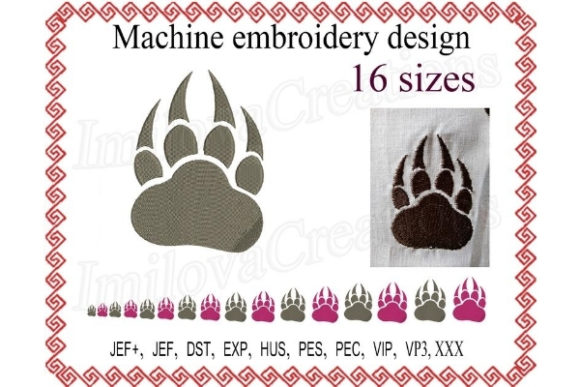
As an embroidery designer who’s digitized and stitched hundreds of small business projects—from bakery aprons to pet boutique tote bags—I immediately recognized Paw with Claws as more than just a cute motif. It reads as confident without being aggressive, approachable without feeling generic, and detailed enough to hold attention—but not so intricate that it sacrifices clarity at small sizes. The title alone signals authenticity: this isn’t a cartoon paw or stylized icon—it’s grounded in the Wild Animals category, suggesting natural texture, organic shape, and subtle strength. For a handmade brand, local café, florist with a rescue dog mascot, or indie pet product line, Paw with Claws lands as both warm and intentional.
Real-World Performance Across Merchandise Types
In practice, Paw with Claws shines where many animal-themed designs falter: on embroidered patches. Its balanced negative space, clear claw definition, and moderate stitch density allow clean registration—even on twill or chenille backings. I’ve used similar motifs on staff uniforms for a neighborhood coffee roaster, and Paw with Claws would translate beautifully to chest logos on work shirts or sleeve accents on denim jackets. Its proportions adapt well to cap fronts (especially structured low-profile caps), where the paw’s downward orientation provides visual weight without crowding the curve.
For tote bag design, Paw with Claws works as a subtle yet memorable branding anchor—centered near the handle seam or scaled down for a corner monogram. On aprons? It adds character without overwhelming function; paired with a small business name in clean sans-serif thread, it reinforces brand identity through repetition and consistency. As a custom apparel accent for handmade soap labels or ceramic mug sleeves, it lends tactile credibility—customers associate thoughtful embroidery with craftsmanship and care.
Etsy sellers and craft businesses will appreciate how easily Paw with Claws integrates into a cohesive suite of design assets. It pairs naturally with hand-lettered shop names, botanical borders, or minimalist typography—making it ideal for printable mockups or digital lookbooks. And because it’s built as a machine embroidery design, it scales reliably across production runs, supporting both one-off client work and batch orders for local events or pop-up markets.
Where to Use Paw with Claws Thoughtfully
Like any strong embroidery file, Paw with Claws demands context-aware application. Avoid placing it below 2 inches tall on curved surfaces like baseball caps unless you’ve tested the distortion—claws can blur or merge on tight front panels. On dark uniforms or textured fabrics (like heavy canvas or fleece), confirm that thread colors provide enough contrast; a light tan or cream thread may vanish where charcoal grey or navy dominates. Also, assess stitch density: if your version includes tightly packed fill stitches around the pad or claw tips, consider simplifying for high-wash items like staff aprons or reusable grocery totes—excess density increases wear risk over time.
Don’t assume automatic compatibility with tiny patch sizes. If your small business merch includes 1-inch woven labels or iron-on badges, verify that Paw with Claws retains legibility when reduced. Some versions of animal paws lose claw distinction under 1.5 inches—always test in black and white first to isolate shape integrity before committing to full-color thread.
How Paw with Claws Strengthens Your Brand Identity
Embroidery is one of the most trusted visual cues for quality—customers subconsciously equate clean, precise stitching with professionalism and attention to detail. When a florist uses Paw with Claws on staff aprons, it quietly communicates warmth, care, and community values. When a pet wellness brand places it on reusable treat pouches, it signals authenticity—not stock clip art, but a considered handmade product element. That perception directly lifts perceived product value and encourages repeat engagement.
Consistency matters: using Paw with Claws across multiple touchpoints—caps, tote bags, packaging tags, even embroidered hangtags—builds visual recognition faster than standalone logos. It becomes a signature motif, especially when paired with complementary color palettes and consistent thread choices. Over time, customers begin to associate that distinct paw shape with your business—not just “a pet brand,” but your brand.
Practical Designer Notes Before You Stitch
- Test it in black and white first—this reveals shape clarity and spacing issues invisible in color previews.
- Check minimum viable size—run a 1.75-inch version on scrap fabric matching your final garment (e.g., duck cloth for aprons, cotton twill for caps).
- Review thread color contrast against your base fabric—especially for commercial embroidery where lighting and laundering affect longevity.
- Inspect spacing between claws and pad—tight gaps may close up during stitching without proper underlay or stabilizer.
- Confirm hoop size compatibility—some versions of Paw with Claws may require larger hoops for optimal tension control.
- Use appropriate stabilizer—light cutaway for knits, medium tear-away for stable wovens, and fusible + tear-away combo for stretchy or textured fabrics.
- Create a physical mockup before client approval—digital previews rarely capture thread sheen, texture, or scale accurately.
- Compare beside other design assets—does it visually harmonize with your logo, typography, and brand palette?
- Verify commercial licensing before use on products for resale—since Paw with Claws is marketed as a digital embroidery file for sewing projects, always confirm permitted usage scope with the seller.
Ultimately, Paw with Claws isn’t just another Embroidery download—it’s a versatile, business-savvy asset. Whether you’re launching a new line of eco-friendly pet accessories or refreshing your café’s uniform program, this machine embroidery design delivers professional polish with genuine charm. Used intentionally, it becomes part of your story—not decoration, but identity, stitched in.