Dolphin Playing with Ball
First Impression: Whimsical, Approachable, and Instantly Recognizable
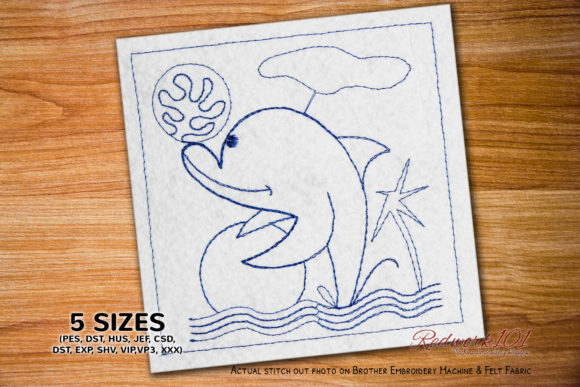
As an embroidery designer who’s curated over 200 craft fair booths and launched dozens of small-shop product lines, my gut reaction to Dolphin Playing with Ball is immediate: it’s a joyful, friendly focal point—not overly complex, not too literal, and full of gentle storytelling. The evening sea setting with sun and cloud suggests warmth and calm; the dolphin mid-play adds motion and personality. It reads as modern-cute rather than cartoonish, making it ideal for handmade products that balance charm with sophistication. It avoids the cluttered busyness that drowns on tea towels or overwhelms on caps—instead, it lands with clarity and lightness.
Where Dolphin Playing with Ball Shines in Real Craft Fair Displays
In my booth setup—featuring embroidered tote bags, aprons, tea towels, patches, fabric pouches, pillow covers, and market bags—Dolphin Playing with Ball performs strongest on three key items:
- Tote bag design: Centered on natural canvas or linen, it reads clearly from 6 feet away. The curved arc of the dolphin’s body and the round ball create natural visual rhythm—no need for extra embellishment.
- Embroidered patch: With its defined outer Box Stitch (optional but recommended), it frames the scene neatly. Patches sell fast at craft fairs—and this one appeals across ages, especially when stitched on denim jackets or backpacks.
- Tea towel embroidery: On medium-weight cotton or linen towels, the design holds proportion well. The sun and cloud elements read as soft texture, not dense fill—critical for avoiding stiffness or puckering.
It’s less effective on curved surfaces like caps unless scaled down and simplified—more on that below.
What Works Online—and What Needs Extra Care
For Etsy sellers and digital embroidery file buyers, Dolphin Playing with Ball photographs beautifully in natural light. Its balanced composition translates well to printable mockups and social media thumbnails. The contrast between the dolphin (likely light thread) and sea background (darker blues or teals) helps it pop against white or neutral backdrops—ideal for scroll-stopping listings.
However, avoid assuming automatic success. This design demands thoughtful execution: stitch density matters. If the sun, cloud, or water ripples are densely filled, they’ll stiffen delicate fabrics like lightweight cotton or rayon blends. And while the Box Stitch adds polish, using a contrasting color for the outer box—as noted in the description—must be intentional, not accidental. Test it on scrap fabric first.
Practical Production Notes Every Embroidery Business Owner Should Know
This isn’t just a pretty image—it’s a machine embroidery design requiring smart prep. Before batch-producing Dolphin Playing with Ball for your small shop product line, do these six things:
- Test on your target fabric: Try it on textured tea towels, structured canvas totes, and curved cap panels. Note where stitches skip or distort.
- Check thread contrast: On dark fabric, confirm the dolphin and ball use high-visibility thread (e.g., white or pale yellow). Avoid relying solely on screen previews.
- Review spacing and scale: Does the ball stay legible at 3" wide? Does the sun retain shape at 2"? Small details vanish fast on patches under 2.5".
- Confirm hoop size and stabilizer: A design with layered sky/cloud elements may need cutaway + tear-away combo stabilizer—especially on knits or loosely woven linens.
- Create one real mockup before ordering materials: Nothing replaces holding a finished embroidered tote bag or pillow cover in hand. Does the mood hold? Does it feel premium?
- Verify commercial licensing: Since you’re selling finished products—not just the embroidery file—ensure your source permits commercial embroidery use. Don’t assume “digital embroidery file” equals blanket rights.
Careful-Use Scenarios: When Dolphin Playing with Ball Needs Extra Attention
This design walks a fine line between expressive and overworked. Use caution on:
- Thick or napped fabrics: Heavy denim or terry cloth may mute fine cloud outlines or soften the ball’s roundness.
- Textured tea towels: Loosely woven cottons can cause skipped stitches in tight curves—especially around the dolphin’s flipper or ball contour.
- Dark fabric backgrounds: Low-contrast thread choices will disappear. Prioritize luminous thread colors for the main subject.
- Small-scale applications: Below 2.75", the sun, cloud, and water details risk becoming indistinct blobs. Simplify or omit non-essential elements for patch or pouch versions.
- Curved cap surfaces: Unless digitized specifically for headwear, standard flat embroidery files often distort near the crown seam. Consider a dedicated cap version—or stick to flat items like aprons and pouches.
Why Dolphin Playing with Ball Strengthens Your Brand & Booth Presence
In a sea of generic florals and minimalist quotes, Dolphin Playing with Ball stands out with narrative warmth and subtle uniqueness. It signals craftsmanship—not just stitching, but intention. Customers pause longer. They ask, “Is that custom?” That’s your opening to talk about handmade quality, sustainable materials, or your local studio process.
It also supports brand consistency: pair it with ocean-inspired palettes (seafoam, coral, sand) across your product range, and it becomes a recognizable signature—like a quiet logo for your small shop product line. At craft fairs, it draws families, coastal lifestyle shoppers, and gift buyers looking for cheerful, giftable handmade items.
Most importantly, it scales well across price points: a $14 embroidered patch feels accessible; a $48 linen pillow cover with the same design feels elevated. That flexibility makes Dolphin Playing with Ball a rare asset—a Fish category embroidery design that transcends niche and invites broad appeal.