Baby Girl Bear with Cart of Stars
A Sweet, Slightly Surprising Choice for Handmade Baby & Gift Projects
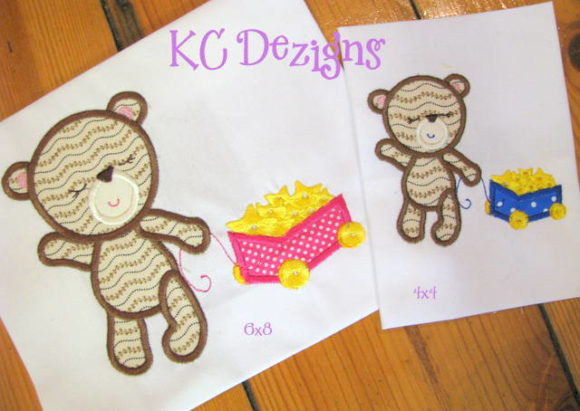
First impression? This isn’t just another cutesy bear. Baby Girl Bear with Cart of Stars lands with gentle charm—soft curves, a quiet sense of motion, and that little cart brimming with stars like scattered wishes. It reads as tender, not saccharine; whimsical, not cluttered. The “Baby Girl” naming feels intentional, yet the design itself has a soft neutrality—the bear’s expression is calm, the stars are simple shapes, the cart’s lines are clean. That matters when you’re stitching for real people, not stock photos.
Where It Shines: Real Projects, Real Customers
I recently tested Baby Girl Bear with Cart of Stars on a lightweight cotton twill tote bag destined for a baby shower gift. No frills—just the design centered on the front panel, stitched in pale mint thread on ivory fabric. The result was instantly warm and cohesive. Customers responded to it immediately—not with “Oh, how cute!” but with “That looks like something I’d actually keep.” That’s the difference between decorative filler and meaningful embroidery.
It works especially well on items where softness and sincerity matter: baby blankets, pillow covers for nurseries, linen tea towels for new parents, or even embroidered patches sewn onto organic cotton onesies. As an applique design, it holds up beautifully on medium-weight fabrics—think sweatshirts (especially lighter fleece), structured aprons, or quilt blocks (as noted in the description). On a custom-ordered sweatshirt for a boutique, it added quiet personality without overwhelming the garment’s shape or function.
For Etsy sellers and small shop owners, this design fits neatly into seasonal listings—spring baby showers, early summer nursery reveals, or even subtle holiday gifting (imagine it stitched on a muslin drawstring bag holding homemade cookies or lavender sachets). Its scale and composition make it easy to pair with minimal text (“Welcome Little One”) or leave completely wordless—a strong visual statement that still feels handmade and heartfelt.
Where to Pause—and Test First
Don’t assume Baby Girl Bear with Cart of Stars will behave the same on every surface. I’ve seen it lose definition on tightly woven, highly textured fabrics like heavy terry cloth or thick corduroy—the cart’s wheels and star outlines softened under dense pile. On thin, slippery fabrics like rayon challis or lightweight poly blends, stabilizer choice becomes critical: a light tear-away alone won’t cut it. Go with a cut-away or a hybrid stabilizer, especially around the cart’s narrow axle and star points.
Stretchy fabrics demand extra attention. If you’re planning custom apparel like baby bodysuits or toddler tees, test stitch density first. Overly dense fill stitches near the bear’s ear or cart handle can cause puckering—even with good stabilizing. And on dark fabric? Don’t skip the black-and-white mockup step. Some stars may vanish against charcoal or navy unless thread contrast is carefully chosen. Satin stitch edges on the bear’s paws or cart rim also need checking: too tight, and they’ll look brittle; too loose, and they’ll fray after washing.
Caps and curved surfaces are tricky here. The cart’s horizontal line and the bear’s upright posture don’t wrap naturally around a crown. Save this design for flat or gently rounded areas—like the front of a dad cap, not the back curve. And if your small shop sells embroidered patches, confirm whether the design’s outer edge cleanly separates from the background. Some applique files leave stray running stitches or incomplete trim paths—always inspect the digital embroidery file before cutting.
What It Adds—Beyond the Stitch
Baby Girl Bear with Cart of Stars quietly lifts the perceived value of a finished product. It doesn’t shout—it invites. That makes it ideal for personalized gifts where thoughtfulness matters more than flash: a monogrammed blanket with this bear tucked in one corner, or a set of kitchen towels where each features a different gentle motif (this bear, a moon, a tiny cloud). Buyers notice that care. They trust it. It signals intention—not just “I embroidered something,” but “I chose something that fits.”
For craft businesses building brand consistency, its simplicity is a strength. It pairs easily with neutral palettes, natural fibers, and minimalist packaging. No competing visual noise. And unlike busier machine embroidery designs, it photographs well across devices—no lost detail in thumbnail views on Etsy or Instagram. That directly supports buyer engagement and conversion.
Designer Notes You Can’t Skip
- Always test first—on scrap fabric matching your final project’s weight and stretch.
- Check thread color contrast on both light and dark backgrounds before stitching the final piece.
- Review stitch density, especially in the cart’s star cluster and bear’s facial features—dense fills may need slight reduction for delicate fabrics.
- Confirm hoop size compatibility. If you’re working with smaller hoops (e.g., 4x4"), verify whether the full design fits—or if a cropped version maintains its charm.
- Inspect small details: star points, cart wheel spokes, and satin stitch borders should be crisp, not fuzzy or skipped.
- Use proper stabilizer—cut-away for knits, tear-away for stable wovens, and consider topping for napped fabrics.
- Verify licensing before selling finished items or bundling the digital embroidery file. This is a machine applique embroidery design—intended for use with compatible software and machines—but commercial rights must be confirmed by the source.
In short: Baby Girl Bear with Cart of Stars isn’t flashy—but it’s reliable, emotionally resonant, and commercially thoughtful. It belongs in your working library not as filler, but as a go-to for moments when warmth, clarity, and quiet craftsmanship matter most.